


Poelis develops engineering software that structures and manages product data across the design lifecycle
Headquarters
Milan, Italy
Headcount
10+ employees
Industry
Software Development
Website
Poelis & Connektica Eliminate 30 to 60 Minutes of Manual Validation Per AIT Cycle
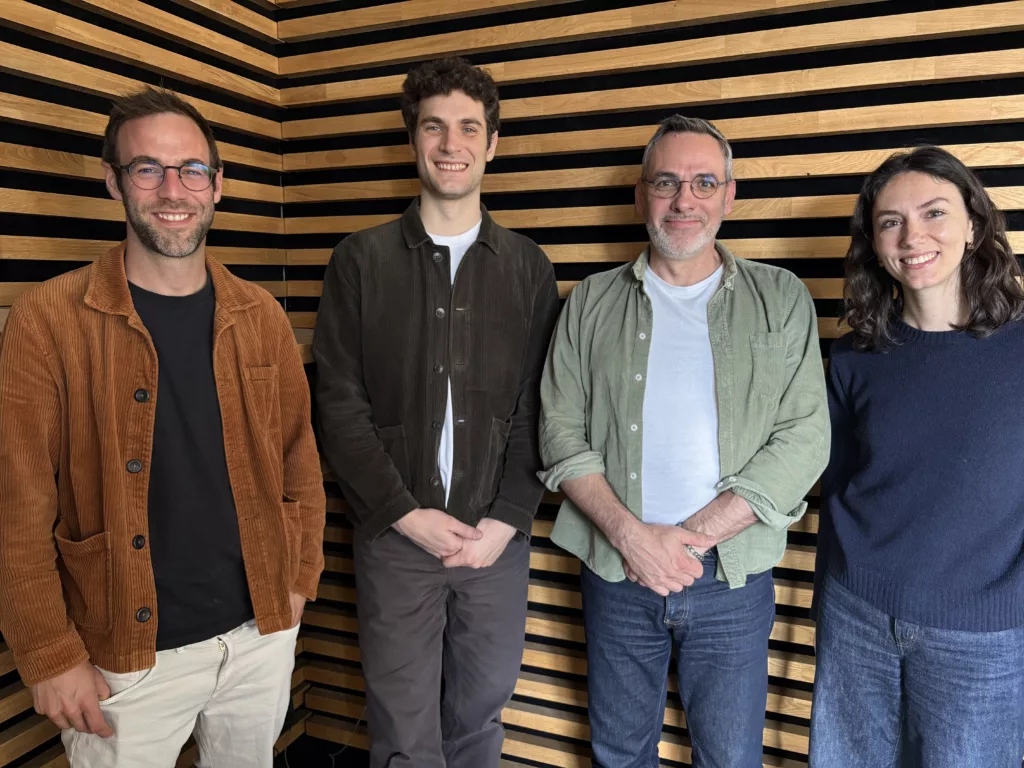
Poelis, founded by a former Airbus Space engineer, a former VC investor and repeat startup CTO, structures and versions product data across the design lifecycle so engineering teams stop validating against stale references. When a shared customer asked for a live connection between the Poelis design data source of truth and its AIT test execution, Poelis and Connektica quickly built an integration. Validation now runs inside the test sequence through an API call from Connektica’s Local Worker to Poelis, removing an estimated 30 to 60 minutes of manual cross-system comparison per AIT cycle and structurally preventing tests from passing against an outdated design baseline.
Key results
- 30 to 60 minutes of manual validation removed
- Validation executed inside the test sequence
- Version consistency is enforced automatically.
- Integration completed in eight hours
- Full validation context captured in the execution record

With the integration of Poelis & Connektica, "teams can make better design decisions more quickly. The instantaneity and quality of the data comparisons unlocks better visibility of results"
Bianca Ambrosini – Co-founder – Poelis
Problem
Design Data and Test Execution Live in Separate Worlds
Michele Genoni co-founded Poelis after several years at Airbus Space, where he was responsible for the propulsion system of telecommunications satellites and closely involved in AIT and testing. The frustration he carried out of that experience was specific: the tools available to engineers did not connect the place where reference data lived with the place where engineers actually used it.
“The mission is to close the gap between where the source of truth lives and where the engineer works and uses the data,” Michele Genoni said.
In practice, this gap meant that every validation required an engineer to leave the test execution environment, locate the correct version of the design data in a separate system, extract the reference values, and compare them manually against the test output. Based on Michele Genoni’s own experience at Airbus, this cross-system comparison could consume several hours per AIT cycle depending on the product and the number of parameters being checked. At the time Poelis was building the integration with Connektica, the shared customer it had in view was running exactly this kind of workflow.
Version management compounded the risk. Test sequences and design configurations evolve on separate timelines. Without a live connection between the two systems, nothing prevents an engineer from validating test results against an outdated design configuration. The failure mode is not a visible error: it is a test that passes against the wrong baseline.
The trigger for building the integration was a shared customer which needed a direct connection between the design data source of truth and the test execution procedure. Manual reporting was not acceptable. Validation had to be automatic and version-controlled from inside the sequence.
Choosing Connektica
Choosing Connektica: API Integration, Decoupled Architecture, and the Local Worker
The integration is based on three pillars: the ability to insert external logic into the test sequence at execution time, an open API and Python SDK that made integration straightforward, and an architecture that kept both platforms fully independent.
The decisive capability was the Local Worker which “allows Poelis to insert itself into the sequence to perform the necessary checks and validations,” Michele Genoni detailed.
The Local Worker is Connektica’s edge component to enable secure connectivity to on-premise equipment and external services. It supports Python-based execution within automated test sequences. This was the unlock to call Poelis’ database from inside a live test step, retrieve versioned design data, and run the comparison as part of the sequence, not after it.
Data exchange happens exclusively through API calls. Neither platform holds the other’s data. Both can evolve their internal architecture independently without breaking the integration.
Implementation: Eight Hours to a Working Integration
Flavien Deschaux, engineer at Connektica, completed 90% of the integration work using the Poelis Python SDK to extract and retrieve design data. The initial configuration took around eight hours. “Flavien created a demonstration in an afternoon,” Michele Genoni noted, describing the ease of integration as one of the most valuable aspects of working with Connektica.
What Changed: Validation Built Into Execution
Before the integration, there was no single, reliable source of truth accessible from the execution environment. Design data lived across multiple documents and systems, sometimes diverging depending on updates, versions, or ownership. Engineers had to navigate this fragmentation manually, with no guarantee that the reference they selected was the correct one.
Validation was therefore a post-execution activity. An engineer completed a test, switched to the Poelis environment, located the correct version of the design parameters, extracted the reference values, and compared them against the test output. Depending on complexity, this consumed between 30 minutes and an hour per cycle, based on Michele Genoni’s estimate from his own AIT experience. It also required manual version checking: engineers had to confirm they were comparing against the right design configuration, with no system-enforced control.
After the integration, the Connektica Local Worker calls the Poelis API during the test sequence. The correct versioned dataset is retrieved at execution time. The comparison runs inside the sequence step. Results are recorded with the design version used, the parameters compared, and the pass or fail outcome, all as part of the execution record.
The version consistency problem is structurally resolved. Because the API call specifies the exact version of the design data, the system enforces alignment between the test configuration and the design configuration. Engineers cannot validate against an outdated reference without that mismatch being visible in the execution record.
The feedback loop also compresses. Bianca Ambrosini, co-founder at Poelis, described the change as follows: “The instantaneity and quality of the data comparisons allow better visibility of results, which leads to better design decisions more quickly.” Deviations surface during execution rather than after a manual validation pass and report reconstruction, which means engineering decisions happen earlier in the cycle.
Key Results
30 to 60 minutes of manual validation removed per test cycle.
Estimates based on engineering workflows where validation previously required manual cross-system comparison of test results against design data (Based on Michele Genoni’s direct experience from AIT work at Airbus Space).
Validation executed inside the test sequence
Connektica’s Local Worker calls the Poelis API during test execution steps, performing design-to-test comparison in real-time without leaving the execution environment.
Version consistency is enforced automatically
Tests run against the exact versioned design dataset retrieved from Poelis at execution time, removing the risk of silent reference mismatch.
Integration completed in eight hours
Flavien Deschaux completed around 90 percent of the integration work using the Poelis Python SDK, with no changes to the core architecture of either platform.
Full validation context captured in the execution record
Design data version, comparison parameters, and pass or fail outcome are recorded as part of the test step, not reconstructed after the fact.
What's next
The immediate priority for both companies is expanding the integration to additional customers. Documentation management is the next development focus at Poelis, including AI-assisted update and maintenance of engineering documentation. On the reporting side, Poelis is working toward the ability to generate data packs that can be uploaded directly to PLM systems, which would close another gap in the design-to-test-to-record loop. A joint webinar is planned for June or July to present the integration architecture and use cases to engineering teams in the space and defense sector.
Ready to see Connektica in action?