

EDGX, a manufacturer of edge computers for satellites, streamlines growth with Connektica
Headquarters
Ghent, Belgium
Headcount
20+ employees
Industry
Space
Website
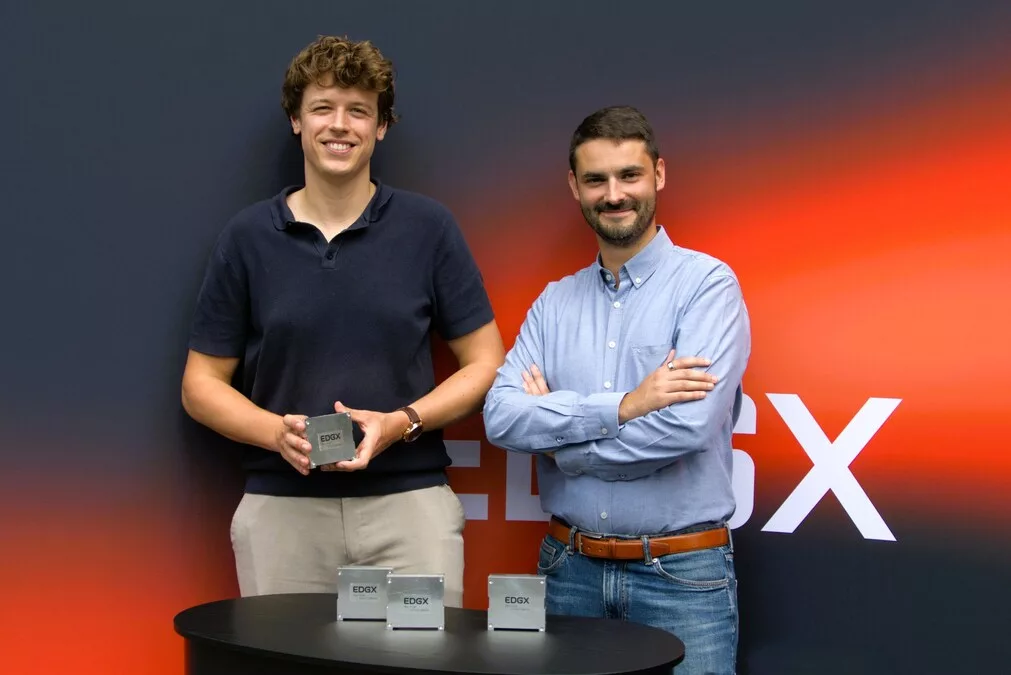
Case Study: EDGX Cuts Execution Time in Half
As EDGX moved from prototype work toward customer production, its paper-based AIT documentation and compliance process was becoming harder to sustain. Procedures were long, updates were cumbersome, and around 25% of AIT time was being spent on compliance documentation instead of technical execution.
By implementing Connektica’s MES, EDGX digitized 400+ pages of procedures in about a month, reduced procedure creation time from 15 hours to 2 to 3 hours, cut report generation from 4 hours to 5 minutes, and strengthened traceability as build complexity increased.
Key results
- Reduced procedure creation time from 15 hours to 2–3 hours (5× decrease)
- Cut a procedure execution time down to 1h30 (2× faster than paper)
- Decreased report generation time from 4 hours to 5 minutes
- Digitized 400+ pages of documentation in 1 month
- Strengthened traceability and compliance

With Connektica, the compliance work became part of the guided execution flow. “It makes assembling our products more fun”
Niel Rogiers – Mechanical and Thermal Engineer – EDGX
Challenges
Paper AIT Hit a Wall at Scale
EDGX’s AIT documentation and compliance process was still largely paper-based, built around long procedures authored in Overleaf (LaTeX) and executed through printed packs. The system worked when they were building a few units, but it became increasingly fragile as the product evolved and more builds happened in parallel. “Changing something small on the document was quite annoying. It was basically coding a document,” explains Niels Baele, AIT Engineer at EDGX.
The compliance burden was also consuming a meaningful share of execution capacity. EDGX estimates that around 25% of AIT time was spent on documentation for compliance rather than on the technical work itself. Niels says that “documentation was taking a lot of joy out of the work”.
Finally, traceability depended on paper discipline. With a backbone procedure described as roughly 125 pages, plus many linked sub-procedures, the total documentation set grew to an estimated 400 to 500 pages per unit produced, making updates and version control harder to maintain with confidence.
Solution
Choosing Connektica: digital work instructions, flexibility, and support
The core requirement was to replace a paper-based AIT workflow with a controlled, traceable execution system. Connektica’s MES designed for Space manufacturers with native aerospace compliance and traceability felt like a good option.
The other criterion was flexibility because the team was still refining its product and processes. EDGX wanted software that could match how they actually worked, instead of forcing them into a rigid process and long customization project. As Niels Baele put it, they did not want to end up locked into “complex software that would become too difficult to change later”.
Just as important was the level of support. EDGX valued that Connektica stayed close to the workflow and iterated quickly on friction points during their onboarding. In Niels Baele’s words, “we had weekly meetings” where they could surface what was painful and improve it rapidly, which mattered for a small team trying to move fast.
Why EDGX Picked Connektica Over Odoo and Manufacturo
Odoo felt too broad and generic for the specific AIT execution and traceability problem. Niels Baele’s assessment was that “Odoo felt too general. You can do everything, but then you end up having to customize everything”, which would turn the tool into a long internal project rather than a production-ready system.
They also reviewed Manufacturo, but Connektica felt more aligned with the space context and with EDGX’s need for structured execution and traceability. As Niels Baele put it, “Connektica seemed more in line with what we needed.”
Live in Weeks, Not Months
“In a week or two, most of the sequences were already in Connektica” says Niels Baele. The complete implementation took approximately 1 to 1.5 months with the transfer of 400 to 500 pages of documentation into the system while continuing operations.
After a short training, engineers quickly adopted the system. They were able to learn the rest by using Connektica which helped the team move fast without turning implementation into a separate project.
Benefits
Faster procedure creation, execution, and reporting. Zero skipped steps.
A 15-page epoxy procedure previously required approximately 15 hours to generate. In Connektica, the same procedure now takes 2 to 3 hours. “So roughly a five-time decrease in time spent on a procedure,” says Niels Baele.
Execution also accelerated. A sequence now requires 1 hour 30 minutes (50 minutes of actual work), while it previously took at least twice as long due to manual photo handling and documentation.
Reporting was another major improvement. Building a compliance report dropped from 4 hours to five minutes. “It gives us a report directly, which is very useful”, Niels says.
Better traceability and more confidence in compliance
Beyond the time savings, EDGX gained confidence in the quality of its records and products.
With paper procedures, quality checks could be skipped by mistake. Switching to digital now makes this impossible and EDGX can delegate work confidently without risking build quality. Another advantage of digital is that scheduling is centralized, instead of being handled via Slack messages. Work interruptions reduced while gaining the ability to know at any time where exactly in the process a unit is at and who is in charge of it.
Another issue with paper was that traceability depended on manual discipline, with the risk that pages could be lost or mixed between builds. By moving execution and evidence capture into Connektica, the team made it easier to keep the right records attached to the right unit. “It makes us more confident about compliance and more confident in the traceability,” says Niels Baele.
That improvement also proved useful in practice. When one finished unit appeared lighter than expected, EDGX was able to review the stored in-process photos to confirm that assembly had been completed correctly, instead of reopening a glued product and risking damage.
A better experience for the engineers doing the work
EDGX also points to a less visible but important benefit. The process became easier and more satisfying for the engineers carrying it out. Before, a significant share of AIT effort was spent on compliance documentation, image handling, and manual reporting. With Connektica, more of that work became part of the guided execution flow. Niels adds “It makes assembling our products more fun”
Ready to see Connektica in action?